The bottleneck in mobile game user acquisition is often not the media budget. It is the rate at which a team can produce new ads, especially playables and video, without a long wait on a specialist production queue.
Two November 2026 launches are aimed at that gap. On 23 November, Higgsfield announced an enterprise workflow that generates playable ads from a game description and optional assets. On 11 November, Layer launched Motion Designer Agent, a chat-based tool for campaign-ready UA videos. Neither product is a media network. Both claim to collapse the time between an idea and a file you can upload to one.
If those claims hold in real studios, the scarce skill moves. It is less "can we afford another playable this month" and more "can we brief, review, and reject fast enough that the extra variants are actually worth showing to players."
What shipped in November
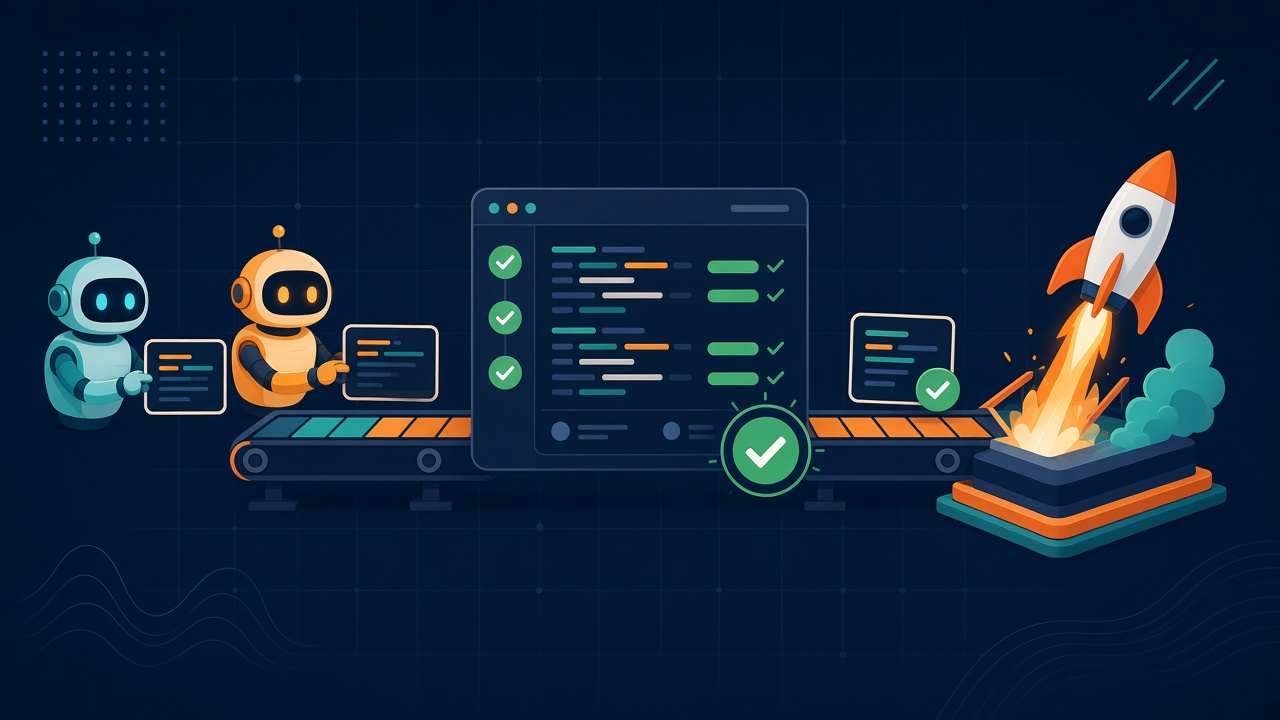
Higgsfield's playable-ad tool, covered by GamesBeat, lets a team describe a mechanic, choose a genre and a 2D or 3D format, and optionally upload sprites, textures, and sound. It can start from a description alone, or edit an existing playable without regenerating from scratch. The company says a first version takes about 40 minutes, or about an hour to an hour and a half with edits, at an estimated $30 to $40 per playable, against a typical manual process of five days and about $5,000. Those time and cost figures are Higgsfield's, and have not been independently verified here.
The output is a lightweight HTML file, designed to stay under 5 MB so it can run on a phone, including older devices. Higgsfield listed export presets for Generic MRAID, Moloco, AppLovin, Google App Campaigns, Unity Ads, Meta, Pangle (TikTok), Mintegral, and Liftoff. That list matters if Google App campaigns are already your main buying channel: a playable is only useful if it can be served where you actually spend.
Higgsfield also said it removed App Store and Google Play link import after studios raised copying and legal concerns. That is a sensible limit. A tool that can read someone else's store listing and spin a playable from it is a legal and trust problem, not a feature. Playable ads themselves are on the enterprise plan; a broader "playable games" generator is listed on all plans. Treat those as marketing products, not as a way to build the shipped game.
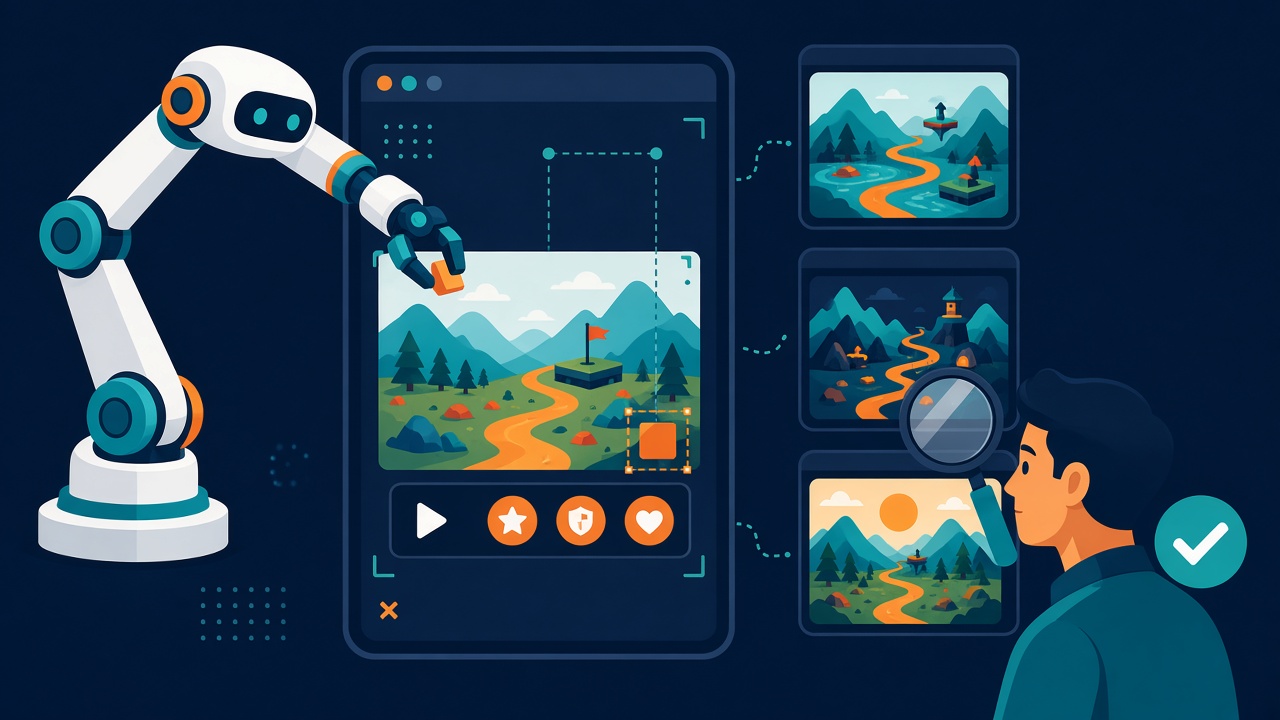
Layer's Motion Designer Agent, announced on PocketGamer.biz in a sponsored post on 11 November, takes the same idea to video. Layer says a user can brief the agent in chat, as they would brief a production team, and get a finished video with script, shots, voice, music, sound, and cuts in roughly 15 to 30 minutes, depending on complexity. It says the tool can recut 9:16, 16:9, and 1:1, start from a store link or gameplay footage, and produce hook and concept variants from the same material. Layer named Small Giant Games, Zynga, and Socialpoint as studios already using it. Those speed and customer claims are Layer's, in a sponsored announcement.
Layer also said it launched a Playables Agent in September, so video and playables can both be briefed in conversation. For a UA team, the combination is the point: the two formats that usually require the most specialist time are the two now being sold as chat-first production.
What this changes in the UA workflow
The old loop is familiar. A performance marketer has ten hooks to test, a motion designer has room for two, a playable vendor quotes in days and thousands of dollars, and the campaign waits. By the time the files arrive, the audience and the competitor ads have moved.
If a first playable can be made in an hour, and a video variant in half an hour, that loop can start on the same day as the brief. You can test the mechanic, the difficulty, the first five seconds, and a second language without booking a week of production. You can also throw more failed ideas away, which is the unglamorous half of creative testing.
It does not mean every generated file should go live. Playable ads are interactive. They can oversell the real game more easily than a film take, because the player has already "played." Networks and stores already police misleading ads. A faster generator makes it cheaper to produce a dishonest loop, not more acceptable to ship one. Higgsfield's own advice, in the GamesBeat piece, is to start with one mechanic, describe the controls, define the end state, and test the full interaction. That is a production checklist. The studio still has to ask a harder question: would a player who enjoyed this playable recognise the game they then install?
The same applies to video. A tool that can write a hook, add a voiceover, and recut a 9:16 from footage will happily invent a tone that does not match the game. Brand rules, logo use, and claims still need a person. Layer's pitch is that the bottleneck moves from production capacity to the quality of the idea. That is only true if someone is accountable for the idea.
What to ask a development partner
Faster ads do not replace the product. They punish a weak first session more quickly, because you will find out sooner that people who clicked do not stay. If you hire a game development team, or a partner working on the related app, the questions to add to the usual build conversation are:
- Can the real loop be shown honestly in a playable? If the fun of the game is a meta layer that appears at level 20, a playable of the first mechanic may get the install and lose the user.
- Who reviews creative before it goes to a network? You need a named person, a policy check, and a rule that a generated ad is a draft until it is approved.
- Can we export to the channels we already buy? For many studios that includes Google App campaigns. A pretty HTML file that cannot be uploaded is not a campaign asset.
- Will the production process keep source files, brand settings, and version history? Once you are testing dozens of variants, you need to know which hook won and how to remake it without starting again.
At Flying Caps we build mobile games and we run user acquisition on Google App campaigns. We use AI tools in our own work. A faster playable or video can help us test more ideas. It does not replace design, a truthful store listing, or a person signing off on what a player is promised.
Limits, cost, and what still needs a person
Vendor time and cost claims should be treated as claims. Your first live playable may take longer than 40 minutes once legal, brand, network specs, and a proper playtest are included. Enterprise pricing, credits, and revision quality will vary. A generated ad can also drift from the game's art direction, or look generic next to a competitor that still shoots real footage.
A successful export is not a successful campaign. Someone still has to set the test, read retention rather than only the click-through rate, and retire ads that get cheap installs of the wrong users. If you want help connecting a game's real loop to a UA creative plan, get in touch with Flying Caps.
FAQs
Can AI already make a playable ad I can run on Google App campaigns?
Higgsfield says its enterprise tool exports a small HTML file with a Google App campaigns preset, among other networks. You still have to upload, pass the network's policy checks, and confirm that the playable matches the live game.
Do these tools build the game itself?
No. They are made to produce ads and, in Higgsfield's case, short playable experiences for marketing. The shipped game still needs design, engineering, live-ops, and store work.
Should every studio switch to AI production now?
Use it to increase the number of honest tests you can run, especially if creative capacity is the bottleneck. Do not use it to scale misleading gameplay, and do not assume a winning ad is a substitute for a game people want to keep playing.
Sources
- Dean Takahashi, Higgsfield launches playable game ads built with AI, GamesBeat, 23 November 2026.
- Layer, Layer launches Motion Designer Agent: Game studios can now create campaign-ready UA videos just by chatting, PocketGamer.biz, 11 November 2026.